
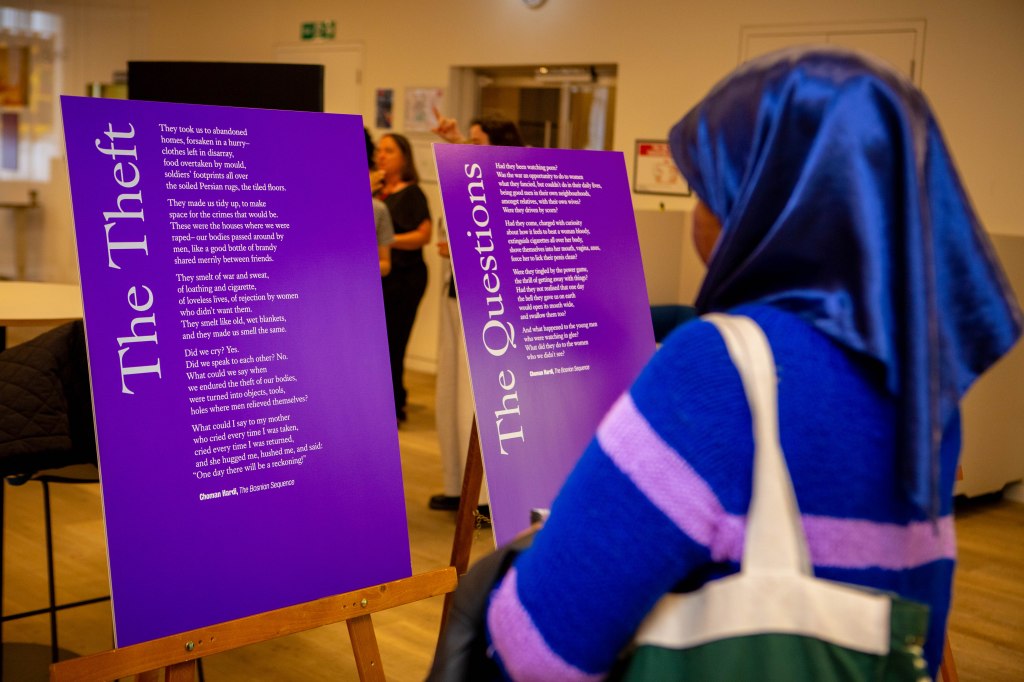
‘Imaging Pain’ focuses on the experience and effects of intersectional gendered violence in contexts of war and genocide and the ethics of conducting research on this topic.
The project is using visual and embodied methods to explore how pain is meted out, experienced and reproduced as intersectional gendered violence in the context of war and genocide, what the social and political consequences are in post-war and post-genocide communities and how making such pain visible might contribute to a gender-just peace.
The research will also investigate the role of community-based and participatory creative activities, and the ethical dimensions of researching pain in the context of intersectional gendered violence.
This project is developed by Professor Rachel Kerr in collaboration with Dr Tiffany Fairey on the Visual and Embodied Methodologies for Addressing Gender-Based Violence project at King’s College London, and Dr Choman Hardi, Founder of The Center for Gender and Development Studies, American University of Iraq, Sulaimani.
Working Paper
Advocacy, Recognition and Repair Artistic Responses to Conflict-Related Gendered Violence, June 2025
Articles
“I have become a poet now” – Arts Cabinet
This conversation between Pranika Koyu and Tiffany Fairey, discusses methodological approaches used during project workshops – to support the survivors to create their poetry while keeping their identities protected.
They reflect on the politics of visibility and silence for survivors of conflict related gendered violence in Nepal, their right to anonymity and the opportunities and limitations around how ‘Chronicles of Silence’ made the women visible, while ensuring that they remained invisible.
What can art do? – Arts Cabinet
Rachel Kerr and Tiffany Fairey examine the power of art and artists in breaking silences, transforming relationships, communicating across divides and providing a means of dealing with trauma and restoring human dignity.
 vemkcl.co.uk